
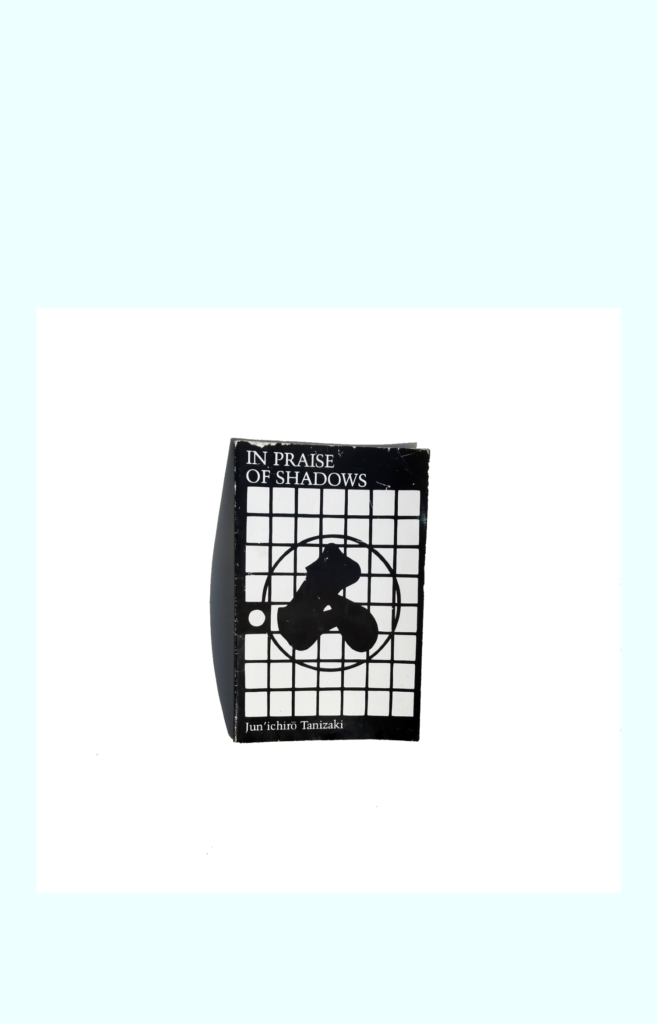
IN PRAISE OF SHADOWS | JUN'CHIRŌ TANIZAKI
Published in 1933, In Praise of Shadows is an essay on Japanese aesthetics written by author and novelist Jun’ichirō Tanizaki. Among the theme of the traditional Japanese culture, the concept of shadow and light is widely approached.
On lighting a space with candle lights
There is a famous restaurant in Kyoto, the Waranjiya, one of the attractions of which was until recently that the dining rooms were lit by candlelight rather than electricity, but when I went there this spring after a long absence, the candles had been replaced by electric lamps in the style of old lanterns. I asked when this happened, and was told that the change had taken place last year; several of their customers had complained that candlelight was too dim, and so they had been left no choice–but if I preferred the old way they should be happy to bring me a candlestand. Since that was what I had come for, I asked them to do so. And I realized then that only in dim half-light is the the true beauty of Japanese lacquerware revealed.
On the importance of shadows
In the cuisine of any country efforts no doubt are made to have the food harmonize with the tableware and the walls; but with Japanese food, a brightly lighted room and shining tableware cut the appetite in half. The dark miso soup that we eat every morning is one dish from the dimly lit houses of the past. I was once invited to a tea ceremony where miso was served; and when I saw the muddy, claylike color, quiet in a black lacquer bowl beneath the faint light of a candle, this soup that I usually take without a second thought seemed somehow to acquire a real depth, and to become infinitely more appetizing as well.
On the mystery of shadows
And so it has come to be that the beauty of a Japanese room depends on a variation of shadows, heavy shadows against light shadows–it has nothing else. Westerners are amazed at the simplicity of Japanese rooms, perceiving in them no more than ashen walls bereft of ornament. Their reaction is understandable, but it betrays a failure to comprehend the mystery of shadows.
On using gold as a source of light
How, in such a dark place, gold draws so much light to itself is a mystery to me. But I see why in ancient times statues of the Buddha were gilt with gold and why gold leaf covered the walls of the homes of the nobility. Modern man, in his well-lit house, knows nothing of the beauty of gold; but those who lived in the dark houses of the past were not merely captivated by its beauty, they also knew its practical value; for gold, in these dim rooms, must have served the function of a reflector. Their use of gold leaf and gold dust was not mere extravagance. Its reflective properties were put to use as a source of illumination. Silver and other metals quickly lose their gloss, but gold retains its brilliance indefinitely to light the darkness of the room.